



Spring Cleaning and Summer Storage: caring for our woolens in the off-season
All right, this is Rose here with you today, and I'm just going to say it: Making time to wash, mend, and store my winter woolens is something I intend to do every year, and in reality I rarely make the time to do it properly, if at all.
I'm putting this disclaimer right here at the start because I don't want to come across as some organizational guru who is about to present a checklist of Things You Must Do To Be A Good Person. When it comes to cleaning and storage, I am learning by doing - a lot of this information is still theoretical to me, passed down from wiser knitters or distilled down from the countless blog posts and articles that I have read as I try to make sense of sometimes conflicting information. If anything I share here does not ring true for you, or you have some advice to share that I didn't include, I'd love to hear from you!
I asked on social media a while ago for tips and tricks about spring cleaning and storage, and I don't think that the crickets I heard in reply were only down to the fact that I can't make engaging graphics to save my life. I believe that a lack of time and a lack of understanding are overcoming our best intentions, and I hope that taking a little dive into the whys and hows of spring cleaning and summer storage will be useful for all of us; this year and into the future.
Let's kick this off with a brief aside about wool.
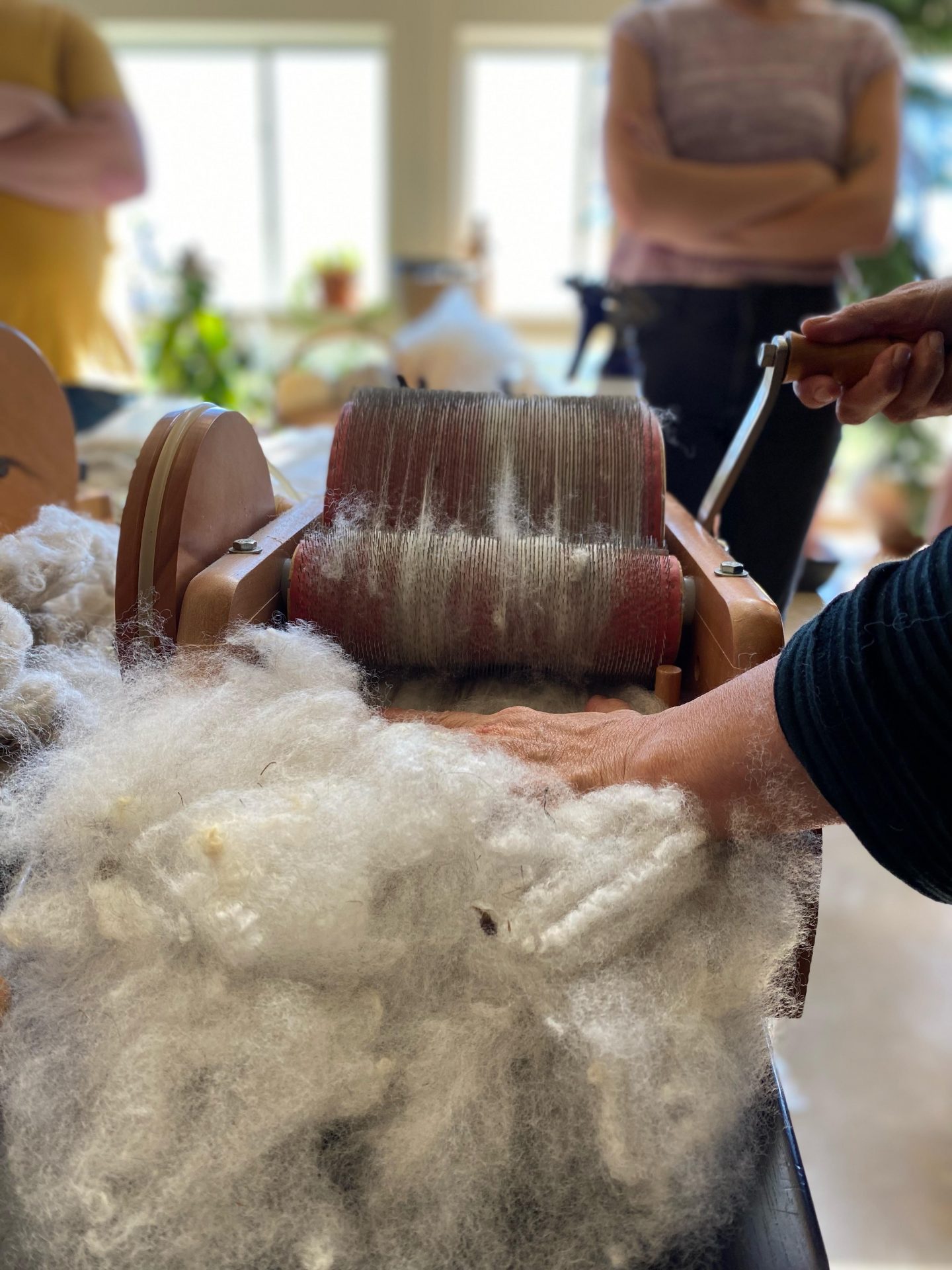
Wool really is a magic fiber; we believe this with every fiber of our beings.
As it's spun from fleece into yarn, air is trapped within the fibers, which makes it very lightweight for its volume and also gives it tremendous insulating powers in cold weather.
Wool can absorb up to 30% of its own weight in water without feeling damp, which makes it excellent for wicking away moisture (which is why it's often used as a base layer by winter sports enthusiasts) or keeping you warm even when it gets wet (which is why those Irish fisherman sweaters are such a thing).
Finally (and this is most relevant to our discussion today), wool is naturally odor-resistant, anti-bacterial and anti-microbial. This means that wool garments do not need to be washed as often as garments made from synthetic materials. In an honest conversation about caring for handknits, most knitters will admit to washing their wool sweaters once or twice per year. Much more frequently (and much easier than washing) sweaters will be 'refreshed' with a handheld steamer or by hanging or laying outside on a sunny or windy day to take advantage of fresh air and the sanitizing powers of the sun.
Infrequent washing saves water and other resources, and when you do wash your wool garments, you know they're not shedding microplastics into the environment with every wash the way synthetic fibers do.
The flip side of infrequent washing is that we will start to get a buildup of keratin (the protein that forms nails, skin and hair and ends up in all of the things we wear) in our woolens, along with crumbs of food and other detritus, and this is what attracts fiber moths. We'll be talking more about those dreaded pests a little later on.
But first, let's get to the suds!
Yarn Manager Sara's Springtime Cleaning Routine:

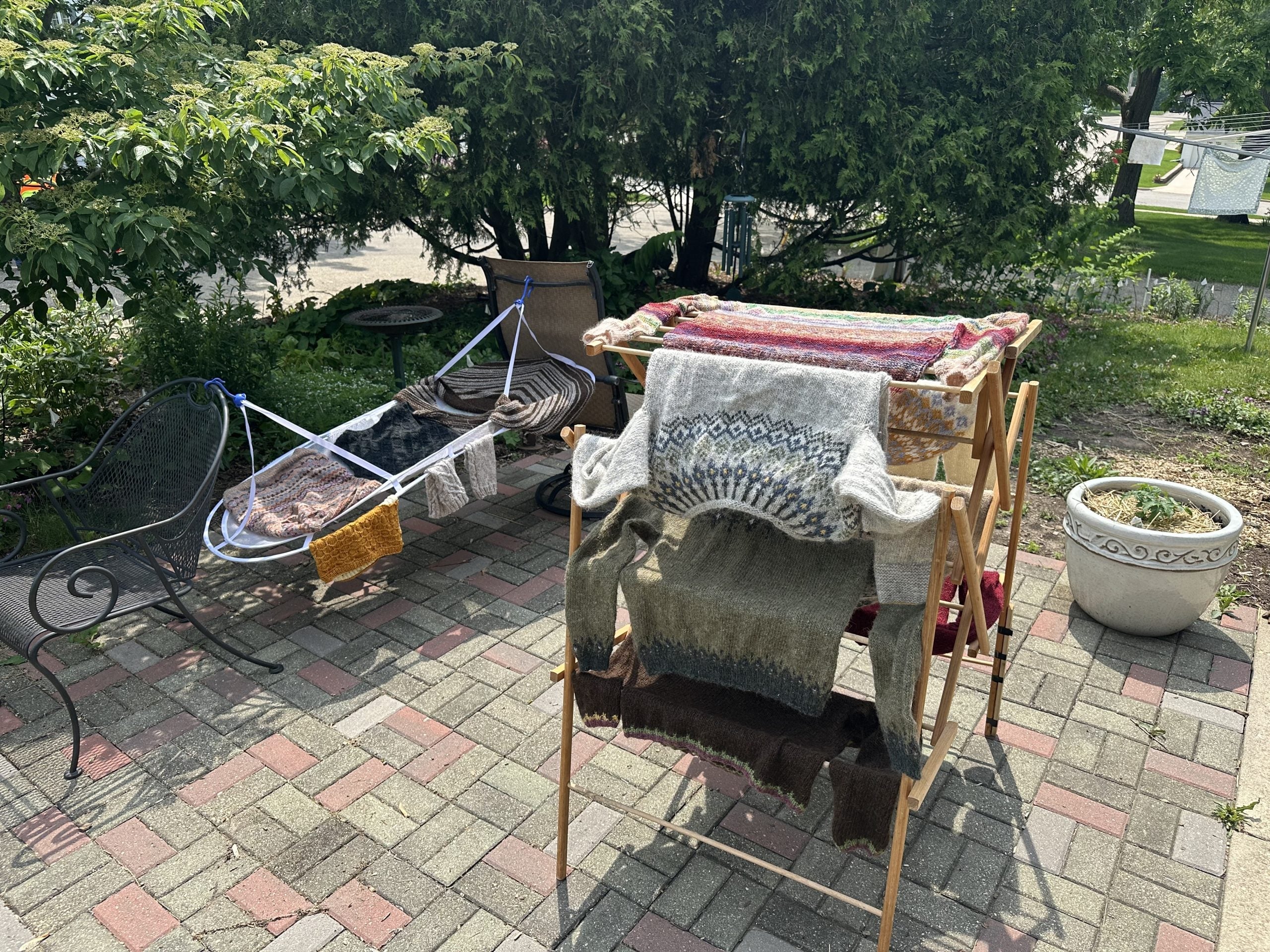
"I have a fairly typical routine. I soak them all with like colors in batches of 3-4 items depending on size. Then I do the spin and drain cycle in the washing machine with the majority and hang up or lay flat on my porch. When they are dry I store them in giant ziplocs with cedar blocks inside my cedar chests."
I've had it so ingrained in me to keep the handknits out of my laundry basket lest they fall prey to the Horrors of the Washing Machine that I honestly sometimes forget that wool will not instantly turn into felt if it so much as touches a machine.
Felting is the result of agitation, moisture, and heat - in other words, going through an entire cycle in a washing machine. So don't do that, but do consider the washing machine as another caretaking tool for your woolens. First give them a soak in a basin with a wool-friendly cleaners like Eucalan or CMC Wool Wash, then gently lift them out of the water (when soaking wet the garment will be heavy and prone to stretching out), and head to the washing machine.
As in all things to do with knitting, we advise caution and careful testing, but if you have a washing machine that has a simple drain/spin mode, this could be a great option for removing excess water from your sturdier handknits without twisting/wringing them out, which can damage the fibers and stretch the garments out of shape.
If you're going to treat sweaters this way - or any other item that has long pieces like sleeves - we'd recommend using a garment bag to protect the item from tangling with its neighbors. Things like hats, mittens, socks, vests, etc, will usually be fine without a bag.
Those same small items can usually be hung to dry, while larger garments should be reshaped (blocked) and laid flat. A mesh sweater dryer works wonders for speeding up that process as it allows airflow around the entire garment.
Some thoughts on Storage

So everything's clean, now what?
When putting handknits into storage, the two main things we're trying to protect against are moisture and pests.
1) Putting handknits away when damp, or storing in a damp environment, leads to mildew and mold.
2) Putting handknits away without washing them first invites pests like fiber moths and carpet beetles that are attracted both to the proteins of animal fibers but also to the residue of use - skin cells, food particles, etc.
There's no one-size-fits-all solution, and you'll have to do some thinking about your own situation. Dry vs humid climate, known pests, and available storage space will be your biggest deciding factors.
In an ideal situation, woolens will do best when they're allowed to 'breathe,' ie when they're stored somewhere with good airflow. During the months when we're regularly taking them out and wearing them, those airings disrupt the onset of both mildew and pests. When we put them away for the season, we need to create a good environment for them, knowing they won't be getting aired out regularly.
Garment bags that close tightly but are made of a breathable fabric will repel pests and allow airflow without trapping moisture in the bag with your woolens.
However if your only storage option is something like a damp basement that doesn't have good airflow or sunlight, investing in some airtight/waterproof bins might be a good plan. In that case, you'll need to take extra care to get everything 100% dry, to avoid mildew.
Whatever your choice of storage container, you may want to pack your woolens with desiccant sachets (start saving those "do not eat" packets of silica that come in shoe boxes, or find them at local hardware stores or online) and check on them regularly. The desiccant packs are absorbent and, if you buy the color-changing kind, the pack itself will alert you to the presence of excess moisture in your bins.
Maintain a moth-resistant environment

If you haven't experienced a fiber moth (or other wool-loving pest) infestation, you've probably heard horror stories about these little jerks destroying years' worth of knitting or entire stashes. And if you see just one moth, or find just one hole, it's not a matter of treating that one thing and assuming it's done - every item made of animal fiber in your house is fair game, and all will need to be inspected and treated.
(Treating a moth infestation is a whole other topic, so for now I'll leave you with two links to in-depth posts, this one by a knitter/sewist and this one by a spinner.)
So, an ounce of prevention being worth what it is, we can take steps to keep fiber-eating pests at bay.
I've never used mothballs, but everything I've read suggests they are just awful; that they are specifically bad for handknits and also generally bad for our health and the environment. So I'm not even going to talk about them here, especially since there are a number of eco-friendly options.
The big one most people already know about is: Cedar.
The naturally-occurring oils in cedar wood emit a smell that deters moths – in part by blocking the scent of keratin, which is what attracts moths in the first place. Cedar oil also contains thujone, which is very effective at disrupting moths' neurological systems, making it difficult for them to find each other to mate, or to lay their eggs or stay in the vicinity of the wood.
Place cedar blocks, rings, hangers or sachets strategically throughout your closet or storage space, including in far corners that don't see much airflow or movement.
The photo of cedar products above comes from the Minnesota-based company Cedar Sense, and this is not technically a Sow's Ear endorsement but it's where I, Rose, have personally sourced my cedar products since they are somewhat local and a family-owned business, two things I like to support.
The moth-repelling oils in cedar wood are volatile, meaning they evaporate and disperse from the wood, so a typical cedar product will remain effective for around 1-3 years if left untouched. To 'reactivate' your cedar block, chest, etc, give it a light sanding and/or refresh it with cedar oil once a year or so.
Herbs and oils
Lavender, rosemary, thyme, cloves and citrus peels are all moth deterrents as well, and just like with cedar you can place sachets of dried herbs around your closet and storage areas. You can find pre-made sachets online at places like etsy (link goes to a lavender farm near Black Earth, WI), or have fun and make them yourself! During farmers market season you can find dried herbs grown locally - I've hear Eugster's farm market recommended as a place for dried lavender, and Willy Street Co-op in Madison or Spellerific in Mount Horeb are good sources for bulk herbs and spices, as well as essential oils.
Peppermint, eucalyptus, tea tree, lavender and cedar essential oils also work to deter moths. You could try enhancing your herb sachets with a few drops of these oils, you can place a few drops of oil on cotton balls and disperse them around your closet, and of course you can use them in a diffuser.
Habits
Moths (and mildew) thrive in undisturbed places without good airflow or light, so we can cultivate habits to make those spaces less hospitable to them:
Keeping your storage spaces as free of clutter as possible will make it less inviting to moths, as well as easier for you to check on/move/air the items you're storing.
Designate a different spot for worn-but-not-ready-to-wash-yet items, which are more attractive to moths, and put a cedar or lavender sachet in your laundry basket (just be sure it doesn't end up in the machine).
Regularly vacuum closets, wardrobes, drawers, and the dark corners and crevices which, if left undisturbed, would make good spots for moths to lay eggs.
Building an Individual Routine that works for YOU
This sounds like a lot, and it can be, especially if you're starting from scratch and trying to create a whole new routine from whole cloth, rather than fold these habits into an existing seasonal routine.
Thinking through what makes this a difficult topic for me personally led to some musings that ran too long to include here, so I'm plotting another whole blog post on the subject of what makes it so difficult to follow through on our good intentions for ourselves, our homes, and our beloved handmade items.
(Now let's see if I can follow through on the intention to write that blog post...it's July already and we're only just talking about spring cleaning 😅 Wish me luck!)
So until then, that's all the time and space we have for today! If you made it to the end, thank you for being here! As I said above, I'd love to hear from you about any plans, rituals, or wisdom you have to share on the topic of handmade garment care. You can reach out to news@knitandsip.com or leave a comment on this instagram post or this facebook post.

Read more
Okay the title is misleading: this is another blog post about Superwash vs Non-superwash! What I hope is that it is not just another blog post about Superwash vs Non-Superwash. I do want to sa...

In our last blog post we talked about spring cleaning and storing our handknits for the summer. Today we want to talk about moving through summertime, the season that tends to fly by faster than a...