


Not another blog about Superwash vs Non-superwash!
Okay the title is misleading: this is another blog post about Superwash vs Non-superwash! What I hope is that it is not just another blog post about Superwash vs Non-Superwash.
I do want to say up front that while this post skews towards extolling the virtues of non-superwash, it's not done with the aim of making a blanket statement either for or against either type of yarn. The point I hope you take away is twofold;
First, that if you haven't had much experience working with non-superwash wool, this post will demystify it a little bit, and perhaps inspire you to try it out for your next project.
Second, but even more important to me, I hope that gaining a deeper understanding of the attributes of your yarn will enable you to choose patterns that turn those attributes from plain facts into positive qualities, and that this will make your crafting experience even richer and your finished project a thing of beauty to be enjoyed forever.
(If you've come here from the newsletter, click here to jump to the point where we left off!)
I don’t want to reinvent the wheel here when there are already so many great blog posts out there that can speak to the technical differences between SW and NSW wool (this one is my favorite, I consult it whenever I need a refresher); rather I want to respond to the most common comments/questions I've heard while working in a yarn shop for the past ten years, and then speak to the artistic differences between the two.
In other words what are the factors we, as the artists and designers of our own fibercrafting experience, want to take into account when choosing yarn to fit a certain pattern, or a pattern to fit a certain yarn.
For the sake of us all being on the same page, here are the very basics you'll need to know to get the most from this discussion, quoted from that article I linked above:
Sheep wool is made of natural fibrous proteins from the keratin group. The keratin is what gives yarn its flexibility, elasticity, resilience and memory. Each 'hair' has a complex physical structure, and is made up of overlapping minuscule scales. The scales help repel dirt and allow the fibers to felt.
I like the way they phrased that – that the scales allow the fibers to felt, as a positive statement about a positive attribute. Because for most of us, whether or not a yarn will felt is at the heart of our understanding about SW vs NSW yarn, and if asked we would likely say, “Superwash will not felt”; a negative statement about a negative attribute.
Felting, also called fulling, is what happens when wool or wool yarn is exposed to water, heat and agitation. (Like going through a cycle in the washing machine.) The scales interlock and bind to each other, transforming individual stitches into a piece of cohesive fabric. This makes the whole thing shrink, and it can no longer be unraveled.

I borrowed this handy image from the knit and crochet blog Petals to Picots, from their handy how-to tutorial post about felting.
Whether or not a yarn will felt in the wash is definitely a problem if we’re talking about your favorite fingering-weight all-over colorwork sweater that took you two years to finish and is now only fit for a teddy bear, but this characteristic of NSW yarn, for the fibers to catch and hold each other during the course of normal wear and use, can actually be an incredibly beneficial attribute, and forms the foundation of much of what we're about to talk about.
A few of of the 'gospel truths' you'll hear in any conversation about SW vs NSW:
- Non-superwash is eco-friendly
- Non-superwas is itchy
- Non-superwash is best for colorwork
- ditto steeking
- ditto seamless sweaters
Let's dig in!
"Non-Superwash is Eco-friendly"

It's pretty safe to say that most non-superwash will be more eco-friendly than its superwash counterpart.
And here's where we define what "superwash" even means: it is the process of making wool machine-washable. To do this, those scales we were talking about above have to be neutralized, so that they won't grab on to each other. The most common process for this is chlorination followed by the application of a plastic resin to coat the scales.
There's no way around just saying it: this process as it stands is not sustainable. It uses chemicals, creates waste, and takes more energy and water than traditionally-processed wool. Luckily, new processes are being developed that Malabrigo, among others, have adopted.
It's important to note that non-superwash yarn is not automatically an eco-friendly product; from sheep to shawl it goes through many hands, with opportunity for exploitation at every step. This is why traceability is the more telling buzzword when shopping specifically for eco-friendly yarn, and this is something we'll talk about later when we introduce Wooldreamers, creators of the incredible Mota, pictured above, which has one of the smallest carbon footprints of any yarn on earth!
"Non-Superwash is Itchy."

I promise I'm not copping out by saying: that's an entirely subjective statement. We had a long-time coworker and yarn manager at the Sow's Ear who made a Cloudbow dress from Einband, the laceweight version of Lettlopi!
Rather than "itchy," which is subjective, it is true to say that non-superwash wool tends to be "scratchy." This attribute can be a pro or a con, depending on what you're looking for. Many people enjoy the rustic feel of less-processed yarn, and in colder climates handknits like wool sweaters would rarely be worn next to the skin.
On the other side, the process of making a yarn superwash does smooth out the fiber, making it soft enough for most people to wear next to the skin, making it a natural choice for warm weather knits, garments for babies, kids, or people who are not likely to appreciate a gift that comes with a hand-wash-only tag.
(That said, there is some thought that certain people might be sensitive to the chemicals used in the superwash process, which could cause itching sensation similar to wearing scratchy wool.)
The bottom line is: only you know what's comfortable for you, and there's always trial and error involved. One of my first fancy knitting projects was a beautiful alpaca shawl which felt amazing in the hand...come to discover thousands of stitches later that I find alpaca to be unbearably itchy against my neck. You better believe I now rub every skein of yarn against my neck before it comes home with me.
The species of animal that the fiber comes from, the breed within the species, the way it is processed and spun, all of these will affect the end result, and the end result will feel different to different people.
A non-superwash Merino could be a good place to start; there's a reason the Merino sheep was considered the gold standard in wool production for - literally! - centuries. (For a long time, anyone smuggling Merino sheep out of Spain risked capital punishment! Yikes.)
Other things to consider when trying to mitigate the prickle of NSW yarns:
- Look for yarns that are worsted-spun instead of woolen-spun; the spinning process affects the feel of the yarn, and worsted drafting aligns the fibers all in the same direction, making for a smoother and often shinier. (Check out this post from MDK, they explain it a lot better than me!)
- Look for brands that list their yarn's micron count on the label, or on their website. The micron count indicates the diameter of a single fiber; the smaller the fiber, the softer the yarn.
If you're curious, you can read more about it here, which is where I found these examples of common micron counts:
- Ultrafine Merino: Approximately 11-15 microns
- Fine Merino: Approximately 18-24 microns
- Mid-grade wools (such as Corriedale): Approximately 25-30 microns
- Coarse wools (such as Scottish Blackface): Around 35-40 microns
"Non-Superwash is best for Colorwork and Steeking."

This workshop full of happy faces showing off their Maja Sweaters and Cardigans would seem to agree with the above statement! (By the way if you'd like to join a workshop like this, we've got one starting in September.)
Remember above when we were talking about felting? The example of the colorwork sweater shrunk to fit a teddy bear is pretty extreme, but there's a much subtler process that comes about from wearing, or even just working with, non-superwash yarns. Especially the very wooly ones like Lettlopi, which is what most of the above sweaters are knit from. I'm going to call this process 'light felting.' Maybe other people call it that too, because it makes sense! (Though it does make me think of Arrested Development and the Bluth family's insistence that they've only committed 'light treason.')
Those scales that are the defining difference between superwash and non-superwash yarn are what give NSW the attribute we describe as 'grippy.' As you're knitting or crocheting along, each stitch will grip on to the ones around it, kind of like velco. Of course at this point you could still frog the work, that's why it's light felting. This is a perfect example of approaching the attributes of non-superwash yarns with a 'bug vs feature' mindset.
Working a colorwork chart? The long floats will lightly felt to the back of the work, keeping your stitches from sliding against each other and messing with your tension.
Wearing a pair of hand-knit mittens to play in the snow or shovel a long walk? The moisture from the snow (and, let's be honest, your sweat), the heat of your body and the agitation of the wool between your hand and the shovel handle means that with every wear, the fibers will bond a little more, with the result that handknit mittens can get warmer, sturdier, and more weather-proof with age.
Planning a project where you will cut your finished fabric (on purpose! It's called 'steeking')? Unless you absolutely can't tolerate non-superwash (or you're gifting it to someone who will undoubtedly forget and run it through the wash), you want to use non-superwash. There are ways of reinforcing the steek to keep your stiches from unraveling as you cut, but I've also seen traditional Icelandic-style patterns, usually written for Lopi-type yarns, where the designers give the option of cutting without reinforcing.
(Another option - needle-felt the stitches to either side of the steek zone! Major bonus of NSW's ability to be felted!)
There are a lot of us at the Sow who really love knitting colorwork, and so probably consider this light felting characteristic as the #1 advantage of non-superwash. If you haven't enjoyed your colorwork endeavors in the past, look back over your projects and see what kind of yarn you made them with. The difference in the experience of working a color chart with grippy vs slippy yarn is diametric.
The final thing I'll mention here is that when you wash and block your non-superwash garment, because the wool is still wooly the yarn will 'bloom,' that is the fibers will relax, expand, and the fabric becomes fluffier than the yarn may have seemed when you were working with it. This process evens out stitches across the garment and gives the colorwork patterns clearer definition.
"Non-Superwash is better for Seamless Sweaters."

There are too many exceptions to this generalization to call it rule; as in most cases the truth here is that it's all about matching the pattern to the yarn, the yarn to the pattern.
Before the advent of circular needles, all sweaters were knit flat in pieces and seamed together. While there are still far more seamed than seamless patterns listed on Ravelry, seamless sweater construction has gained popularity since it is, generally speaking, an easier/faster method of construction. But the thing about seams is that each one is a kind of lifeline for your garment. You might say that seams are there to literally pull their own weight: every seam in a garment is a line of defense against knitted fabric’s natural tendency to stretch, sag, and bias.
You may remember the above quote: "The keratin is what gives yarn its flexibility, elasticity, resilience and memory." Working with superwash wool can be compared to working with plant fiber; it will still have a lot more stretch and bounce than, say, linen, but the nature of the slippery beast is that gravity will take advantage of any spot it can find to do its work, leaving sleeves, hems, and necklines vulnerable to stretching out. So think of seams as the framework that holds your tank, tee, or sweater in the shape it’s supposed to be.
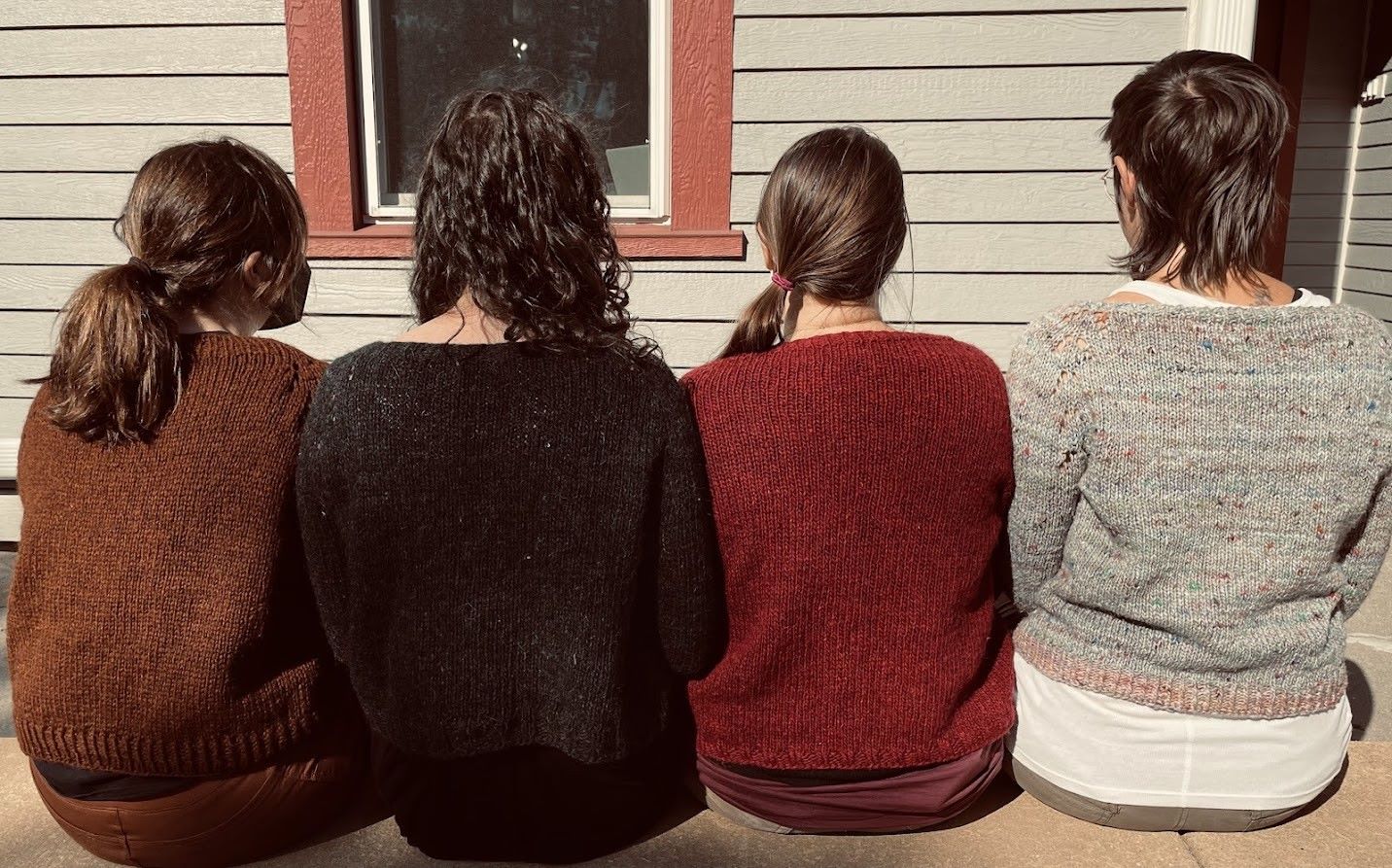
A brief case study: The picture above shows four of us modeling our Felix sweaters (you may recall the Sow staff being a trifle obsessed with that pattern a few years back, maybe even got in on it yourself?). The pattern makes a pullover with a relatively wide neck and deep armholes. It's knit top-down with raglan yoke shaping, meaning all the weight of the sweater hangs directly from the shoulders, making it naturally prone to stretching over time. Here's what I can tell you: my Lopi version looks about the same as the day I made it, while the one that's 75% Merino - not even superwash, just very fine, smooth Merino - and 25% nylon has, over the years, acquired a sort of fetching, off-the-shoulder look. Conclusion: a Felix-type sweater knit from a grippy, NSW yarn would have a better chance of holding its shape over time with normal wear.


In conclusion...
Now that you're brimming with knowledge about how and when and why to use non-superwash yarn, would you like to see some gorgeous examples and check out a broad array of pattern ideas? I thought so!
My Newsletter pals got this straight to their inbox, but we'll let you have a peek too, if you'll click right this way...
Want to be notified when more content like this goes up? Subscribe to our newsletter today!
Read more
"Usually I start with a color idea from something that I have seen and liked, but when the process starts all is going spontaneously and I just mix and add colors until I like the result. I like t...
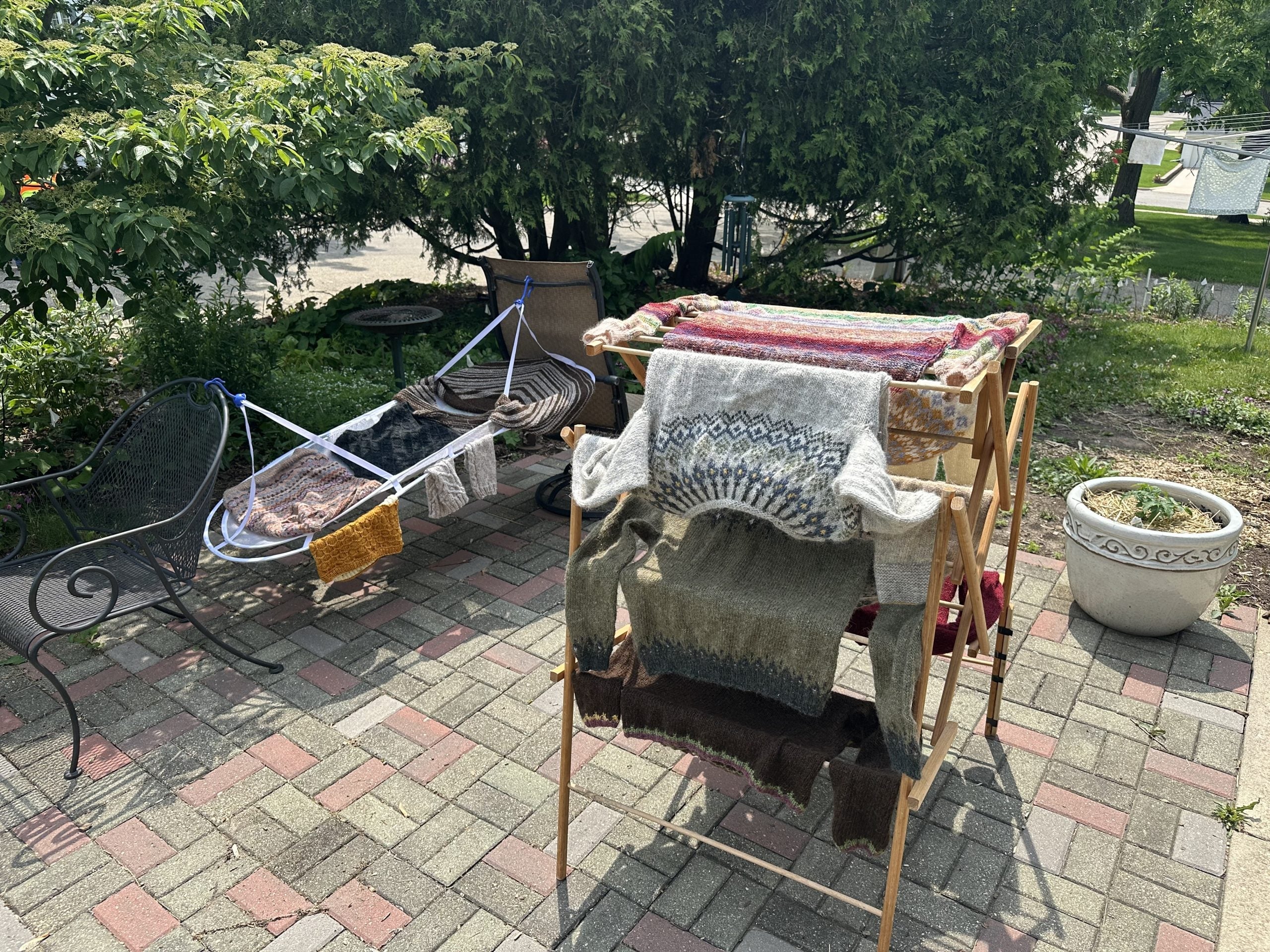
All right, this is Rose here with you today, and I'm just going to say it: Making time to wash, mend, and store my winter woolens is something I intend to do every year, and in reality I rarely ma...